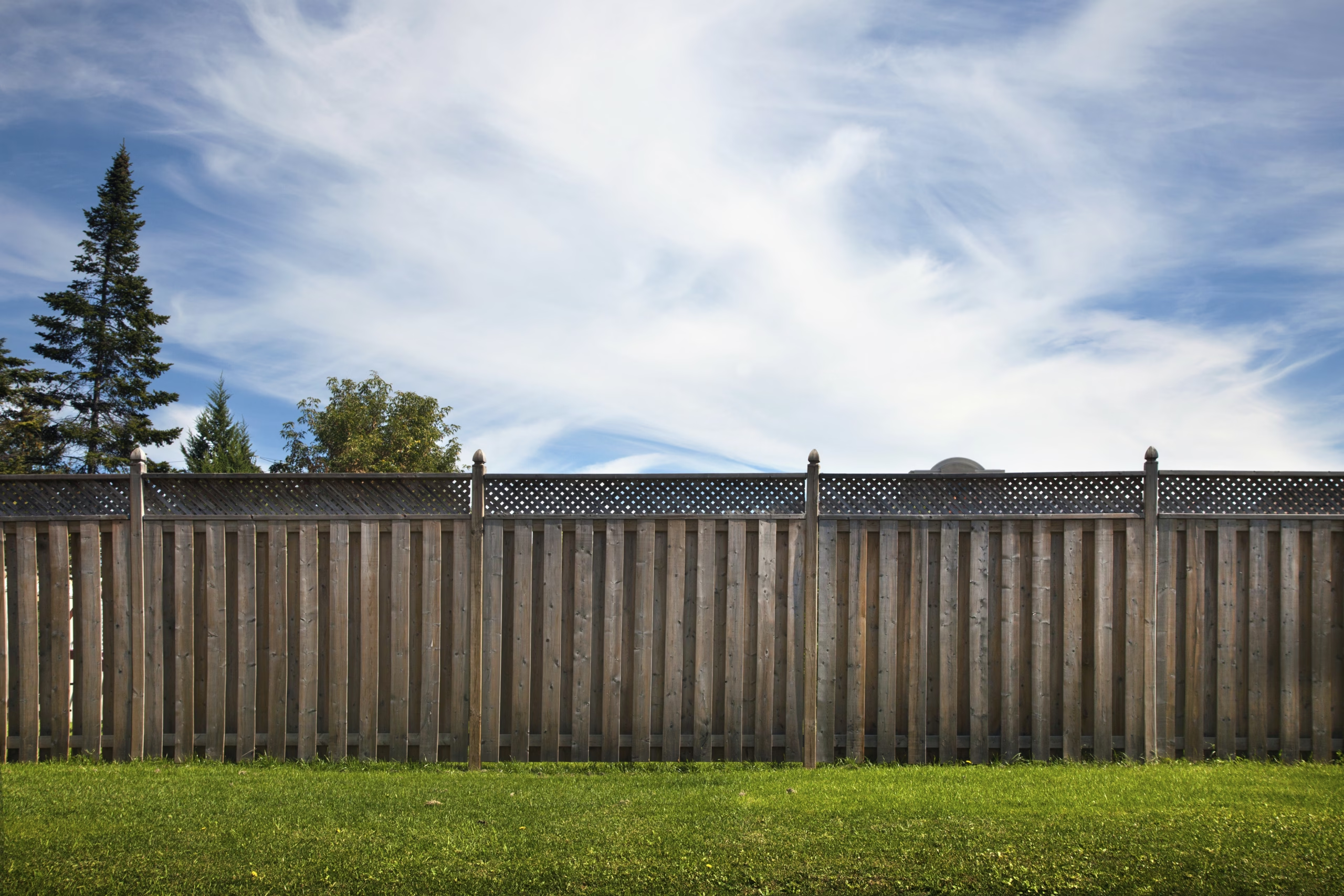
“Something there is that doesn’t love a wall…”
So begins Robert Frost’s iconic poem Mending Wall, a deceptively simple piece that invites us to think deeply about the boundaries we build and why we keep rebuilding them.
As a motivational keynote speaker, I often use poetry, storytelling, and humor to spark conversations about workplace habits. And this one? It hits home in ways most teams don’t expect.
Each spring, two neighbors walk the length of the stone wall that separates their properties, repairing winter’s damage. One insists, “Good fences make good neighbors.”
The other—our poetic narrator—isn’t so sure.
Here’s the full poem:
MENDING WALL
By Robert Frost
Something there is that doesn’t love a wall,
That sends the frozen-ground-swell under it,
And spills the upper boulders in the sun;
And makes gaps even two can pass abreast.
The work of hunters is another thing:
I have come after them and made repair
Where they have left not one stone on a stone,
But they would have the rabbit out of hiding,
To please the yelping dogs. The gaps I mean,
No one has seen them made or heard them made,
But at spring mending-time we find them there.
I let my neighbor know beyond the hill;
And on a day we meet to walk the line
And set the wall between us once again.
We keep the wall between us as we go.
To each the boulders that have fallen to each.
And some are loaves and some so nearly balls
We have to use a spell to make them balance:
“Stay where you are until our backs are turned!”
We wear our fingers rough with handling them.
Oh, just another kind of out-door game,
One on a side. It comes to little more:
There where it is we do not need the wall:
He is all pine and I am apple orchard.
My apple trees will never get across
And eat the cones under his pines, I tell him.
He only says, “Good fences make good neighbors.”
Spring is the mischief in me, and I wonder
If I could put a notion in his head:
“Why do they make good neighbors? Isn’t it
Where there are cows?
But here there are no cows.
Before I built a wall I’d ask to know
What I was walling in or walling out,
And to whom I was like to give offence.
Something there is that doesn’t love a wall,
That wants it down.” I could say “Elves” to him,
But it’s not elves exactly, and I’d rather
He said it for himself. I see him there
Bringing a stone grasped firmly by the top
In each hand, like an old-stone savage armed.
He moves in darkness as it seems to me—
Not of woods only and the shade of trees.
He will not go behind his father’s saying,
And he likes having thought of it so well
He says again, “Good fences make good neighbors.”
You can read more about Robert Frost’s Poem at the Poetry Foundation.
What Motivational Keynote Speakers See in Workplace Walls
As a motivational keynote speaker, I see this poem not as a quaint commentary on rural life but as a mirror for the workplace.
We all have our “walls.”
They are not made of stone, but of habits, fears, and inherited beliefs:
Avoiding honest feedback to “keep the peace”
Saying yes to everything because we think it’s what a good teammate does
Keeping emotions at arm’s length in the name of professionalism
And every spring—metaphorically or otherwise—we go out and patch them up. We don’t stop to ask, “Do we even need this wall anymore?”
Why We Rebuild the Wrong Things
Just like Frost’s neighbor, we are often clinging to what we have always done because it is comfortable or at least familiar.
In corporate culture, that might look like:
Over-relying on hierarchy when collaboration would serve us better
Sticking with outdated meeting structures because “that’s how it’s always been”
Fearing vulnerability even when it could build real trust
I talk about this often in my programs as a mindset speaker for corporate culture. Sometimes, the biggest breakthroughs come when we stop repairing what is broken and start reimagining what is possible.
The Courage to Question
What I love about the narrator in Frost’s poem is his curiosity. He does not tear the wall down. He does not shame his neighbor.
He simply asks, “Why?”
That is where transformation begins.
Whether I am speaking to HR teams, leading workshops, or delivering an interactive keynote for events, I challenge people to question their “walls.” Because questioning is not rebellion—it is leadership.
Ask yourself:
What am I protecting with this boundary?
Is it helping or hurting connection on my team?
What would happen if I let some of it fall away?
Sometimes the healthiest thing you can do for your organization is not to build.
It is to unbuild.
A Final Thought (and a First Step)
If something inside you is tugging at one of those mental or cultural walls, don’t ignore it.
“Something there is that doesn’t love a wall…”
Maybe it is your gut. Maybe it is your growth.
And maybe—just maybe—it is time to stop mending and start transforming.
Looking to boost employee morale or shake up old mindsets at your next event?
Book Tim as your motivational keynote speaker or funny speaker for HR conferences
Let’s challenge the walls that no longer serve and build something better. Visit Tim Gabrielson’s Keynote Page to learn more or watch his Motivational Keynote Speaker Demo Reel Below.