When the Day Goes Sideways, Most People Don’t Notice What They’re Losing
It’s rarely a single moment.
It’s when a few small things combine and quietly spiral the rest of the day.
Things that don’t feel big in the moment,
but hang around longer than they should.
A schedule change.
A delayed flight.
A number that didn’t land the way you hoped.
A conversation that didn’t go how you expected.
Not the exact moment itself.
But the moments that follow it.
You carry it into the next meeting.
You’re shorter with people who didn’t cause it.
You’re physically present, but mentally elsewhere.
By the end of the day, you’re tired.
Not from effort.
From friction.
Why This Actually Matters
This stuff adds up.
People notice how you carry hard moments, even when no one says anything about it.
Not in obvious ways.
In tone.
In patience.
In whether you feel steady or reactive.
Over time, this becomes how people experience you.
At work.
At home.
In leadership.
I’ve spent years in rooms full of smart, capable people as a keynote speaker.
Executives.
Managers.
Sales teams under pressure.
The difference between rooms that feel heavy and rooms that feel grounded is rarely talent or intelligence.
It’s response.
This is really a story about how leaders respond under pressure, and how that response shapes the room long after the moment passes.
A Storm in Mississippi That Could Have Gone Either Way
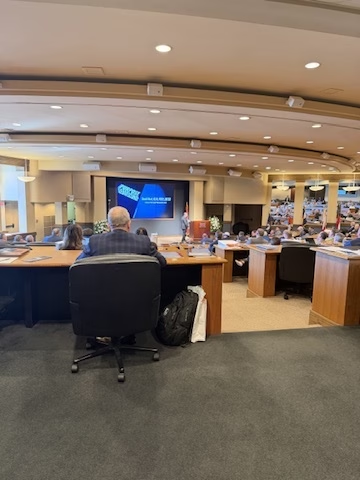
I was keynote speaking at a Farm Bureau event in Mississippi.
A major storm had rolled through the area.
Flights were delayed.
People had trouble getting in.
The morning keynote speaker couldn’t make it from Texas, so the entire schedule shifted.
If you’ve ever planned an event, you know how quickly that can affect a room.
Frustration.
Low energy.
People bracing instead of engaging.
But that’s not what happened.
The marketing team adjusted.
They moved things around.
They made it work.
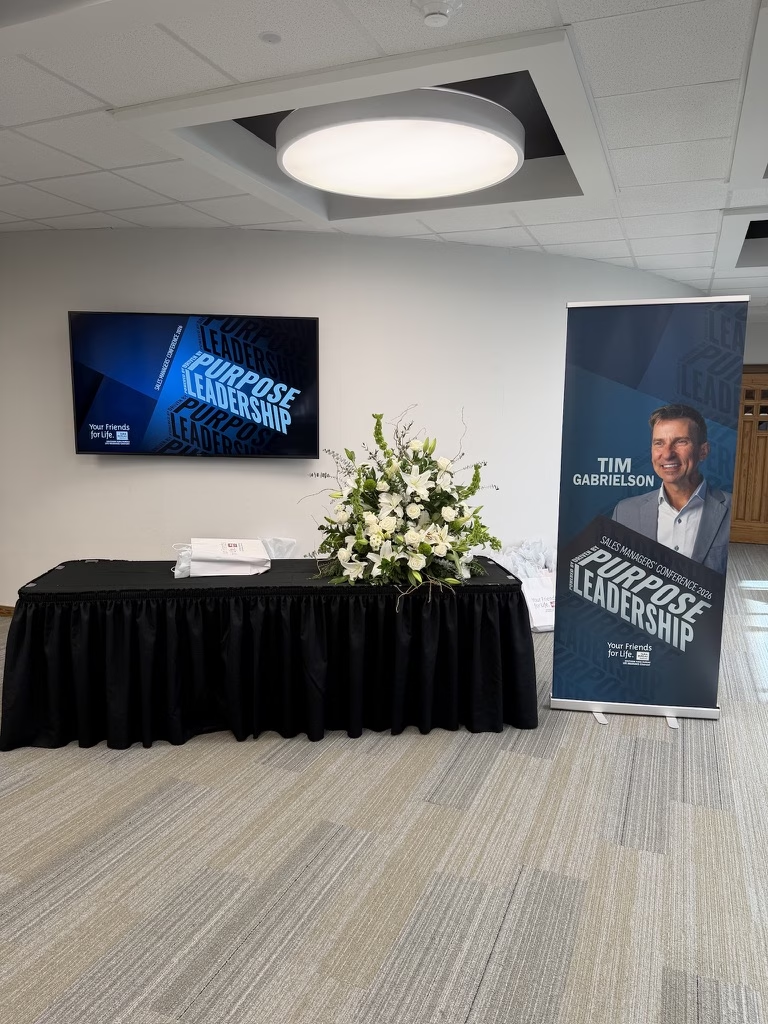
Before I even spoke, I was standing outside the room.
No one knew who I was.
And person after person came up, shook my hand, and asked how I was doing.
Salespeople, yes.
But not salesy.
Present.
Genuine.
Human.
They started their day together grounded.
They cared about each other.
They cared about the people they serve.
You could feel it.
Everyone was dealing with the same mess.
Some rooms felt heavy.
This one didn’t.
The Line That Explains the Difference
There’s a line I’ve been carrying for a long time.
I watched it play out again.
You can’t change what you’re dealt.
But you can change how you deal.
This isn’t positivity.
It isn’t pretending things are fine.
The storm still happened.
The speaker still couldn’t get in.
The schedule was still rearranged.
The hand didn’t change.
What changed was how much energy people gave to fighting it.
Where Most People Lose the Day
Most people don’t lose the day all at once.
It slips away in pieces.
They replay what shouldn’t have happened.
They argue with the deck like it’s listening.
They let frustration spill into places it doesn’t belong.
And while they’re busy explaining why the day went wrong,
the chance to reset quietly passes.
That’s the real cost.
Not the delay.
Not the number.
Not the storm.
The cost is giving the day more control than it deserves.
What “Look for the Good” Actually Means
“Look for the good” gets misunderstood.
It’s not about ignoring problems.
It’s not about optimism.
It’s about responsibility.
There is a moment where you decide whether the hand gets to run you
or whether you’re going to play it intentionally.
That moment is small.
Easy to miss.
And it’s the only part you actually control.
When you stop fighting the hand, a few things happen quickly.
You stop bleeding energy into frustration.
You reset faster.
You start influencing the room instead of reacting to it.
What I saw today wasn’t hype.
It was leadership.
A Simple Choice That Changes the Rest of the Day
This isn’t complicated.
Pause long enough to notice you’re reacting.
Accept the hand for what it is.
Choose your response on purpose.
That’s it.
Same cards.
Different play.
I’ve seen this hold true in corporate rooms, on stages, and in everyday moments when plans fall apart.
The people who manage their response don’t just have better days.
They’re the ones others trust when things feel uncertain.
Moments like this reveal how leaders respond under pressure, especially when plans fall apart and people are paying attention.
The Takeaway
At the end of the day, the facts were still the facts.
The numbers were still the numbers.
But the room felt different.
The people felt connected.
The momentum was real.
That didn’t happen by accident.
The next time something doesn’t go your way, don’t rush to fix it.
Don’t justify your frustration.
Don’t let one moment run the rest of the day.
Ask this instead:
How do I want to deal this hand?
Because you can’t change what you’re dealt.
But you can change how you deal.
And when you do,
the day starts to get better
before anything else does.